 Pagalmusiq.com Popular News Update Website | Pagalmusiq.com
Low-power and energy-saving technologies have become essential in modern LED display technology as digital signage expands into both indoor high-definition environments and large outdoor installations. As screen sizes increase and operational hours extend, power efficiency directly impacts both operating costs and environmental sustainability. Technologies such as Common Cathode design, COB LED displays, and advanced energy-saving driver ICs allow LED displays to achieve high brightness, excellent image quality, and long-term reliability while minimizing energy consumption. These innovations are particularly critical for applications such as 3D digital billboards or fine pixel pitch LED screens, where large-scale screens must operate efficiently under variable conditions.
The comparison of Common Anode vs Cathode highlights a major advancement in LED display panel technology. In Common Anode displays, a single voltage is applied to all LED chips, even though red, green, and blue LEDs require different operating voltages—around 2.8 volts for red and 3.8 volts for green and blue—resulting in excess energy being wasted as heat. Common Cathode technology overcomes this limitation by supplying power separately to each color channel, delivering precise voltage to each LED. This reduces energy loss, lowers overall power consumption by 30–50%, and decreases screen temperature by approximately 20°C. By reducing heat, Common Cathode improves LED module longevity and enhances display stability, making it the superior choice over Common Anode for energy-saving LED displays designed for continuous operation.
COB LED display technology further enhances energy efficiency and performance by changing the way LEDs are mounted and cooled. Traditional LED technology SMD relies on thin wire bonds to transmit electricity to the LED chip, which introduces electrical resistance and partially obstructs light. In COB technology, the chip is mounted directly onto the circuit board face-down, eliminating wire bonds and allowing the board to act as a large heat sink. This configuration lowers electrical resistance, increases light output, and significantly improves thermal management. When paired with advanced energy-saving driver ICs that dynamically manage pixel operation and reduce energy use during low-content intervals, a COB LED video wall can achieve high brightness with lower power consumption. This combination produces low-power LED displays without sacrificing visual quality or reliability.
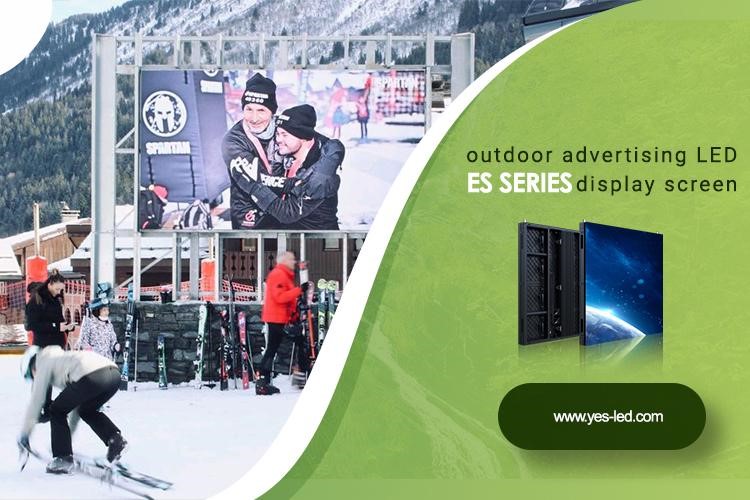
Choosing the right LED display requires consideration of multiple factors, including viewing distance, operational environment, runtime, brightness, and energy efficiency. Large outdoor and landmark displays benefit from high-efficiency LEDs and intelligent brightness adjustment to reduce power consumption while maintaining visibility in varying ambient light. The YES TECH ES outdoor LED digital billboard addresses these needs with energy-efficient, high-brightness LEDs and advanced power management, making it suitable for commercial outdoor digital signage displays. Indoor environments such as control rooms, conference centers, and monitoring facilities require displays with consistent color performance, low heat output, and high resolution. The YES TECH Mnano series combines COB LED technology with energy-saving driver ICs to deliver uniform black levels, excellent HDR performance, and minimal power usage, making it an ideal LED display for demanding indoor applications. By integrating the COB package and energy-saving LED display technology, these solutions provide high performance, operational efficiency, and long-term reliability for a wide range of applications.
