 Pagalmusiq.com Popular News Update Website | Pagalmusiq.com
Machine sizing is not only an engineering calculation. It affects investment cost, floor space, energy demand, mold compatibility, cycle planning, and future production flexibility. For manufacturers processing high temperature vulcanized silicone rubber, an oversized machine can tie up capital, while an undersized machine can restrict process stability or part size.
This matters when long electrical insulation parts are involved. An HTV silicone insulators injection machine must match the mold, shot volume, clamping requirement, product geometry, and planned output. The business case comes from choosing enough capacity for the real process without paying for capacity that the project does not use.
Why Sizing Is a Business Decision
Machine size influences more than the purchase price. Larger equipment may require more installation space, heavier foundations, larger auxiliary systems, and higher connected power. These factors change the project budget before production begins. Buyers need to evaluate the installation, not just the machine quotation.
Undersizing creates a different cost. If injection volume, clamping force, mold space, or opening stroke cannot support the target part, the machine may limit production from the beginning. The result can be lower process flexibility or earlier investment in another machine.
For B2B buyers, the useful question is not “How large a machine can the budget buy?” The better question is “What machine size supports the defined product range and production plan?” This changes sizing from a specification exercise into an investment decision.
Start with the Part and Mold
The product should define the first sizing inputs. Buyers need to review part dimensions, rubber weight, cavity number, mold dimensions, and the space required for loading and demolding. Long insulation components can place different demands on a machine than compact rubber parts.
Mold layout also matters. Opening direction, mold thickness, access space, and opening stroke affect whether a machine can handle the tooling in daily production. For an HTV silicone insulators injection machine, these details should be checked before clamping force or injection capacity is treated as a final selection figure.
The review should include future molds in the production plan. Buying only for the smallest current mold may reduce initial spending but shorten the equipment’s useful range. Buyers should define a realistic mold envelope instead of adding excessive spare capacity.
Material Behavior Changes the Calculation
Processing high temperature vulcanized silicone rubber also affects sizing decisions. The injection system needs enough capacity for the required shot while supporting controlled material delivery. A machine selected mainly by nominal tonnage may still be unsuitable if the injection unit does not match the compound, shot size, or product geometry.
Process consistency is another consideration. Injection pressure, material flow, and mold filling interact during production. Extra machine capacity does not automatically improve these factors. The equipment configuration needs to fit the molding process, especially when long parts require controlled filling across a large mold area.
This is why buyers should compare machine specifications as a connected system. Injection capacity, clamping structure, mold space, hydraulic functions, and control capability should be reviewed together. Looking at one large number in isolation can hide a mismatch elsewhere.
Capacity Should Match the Production Plan
Sizing should reflect how the machine will be used. A project with several product sizes may need more mold flexibility than a dedicated line producing one part family. Production volume, changeover frequency, maintenance access, and expansion plans all influence the value of additional capacity.
Utilization matters because unused capacity still has a cost. If a machine is substantially larger than the molds and shot sizes used every day, the buyer may be paying for capability that rarely contributes to output. The same logic applies when a plant chooses specialized molding equipment for a narrowly defined product range.
A practical sizing review can compare current demand with a reasonable future range. This gives procurement and engineering teams a clearer basis for discussing trade-offs. The goal is to make spare capacity intentional and linked to expected business needs.
Where Machine Design Enters the Equation
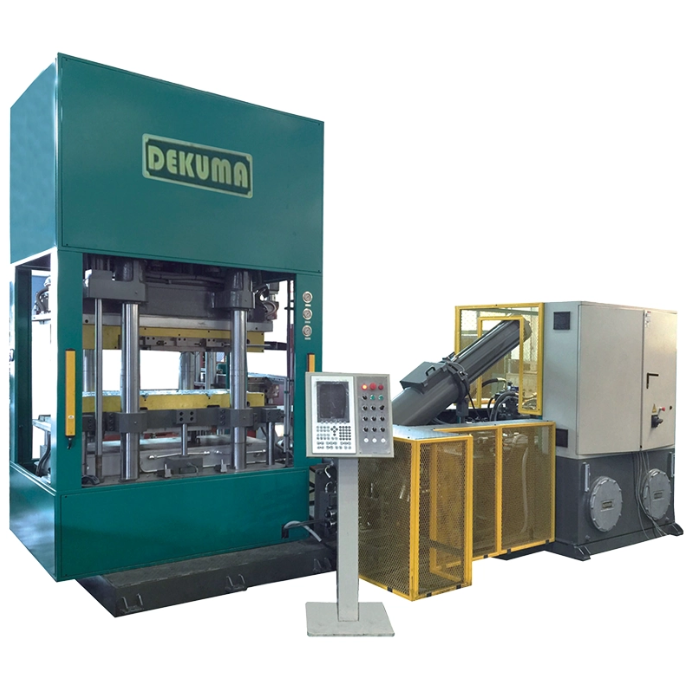
The RT Series Rubber Injection Molding Machine from Dekuma is specialized for HTV silicone rubber products and is intended for long and large electrical insulation components. Its design can be considered when buyers need equipment that matches this type of production.
The series uses a top-opening mold structure, a block-type clamping unit, hydraulic mold thickness adjustment, and an optimized injection system. These features relate directly to mold handling, clamping, setup, and injection, which are important parts of a sizing review rather than separate purchasing details.
It also uses an Austrian-made B&R control system. The RT Series is designed for HTV silicone rubber molding in large electrical insulation applications. Buyers should assess how the machine structure and controls fit the planned mold range and process instead of selecting equipment by clamping force alone.
A Better Sizing Review Before Purchase
Better machine sizing starts with documented production requirements. Buyers can define target parts, mold range, material, shot requirements, clamping needs, installation limits, and expected production volume before comparing models. This makes supplier discussions more specific and reduces incomplete comparisons.
For projects using high temperature vulcanized silicone rubber, the final choice should connect technical fit with business use. The right HTV silicone insulators injection machine is not simply the larger option. It is the machine whose usable capacity, mold compatibility, and process configuration fit the production plan with a reasonable margin for future work.
